

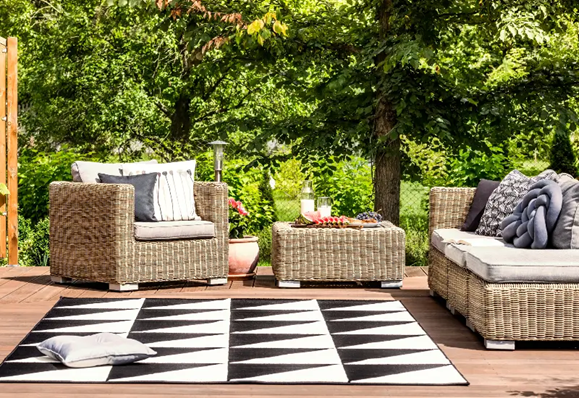
Are Outdoor Rugs Bad for Wood Decks in Atlanta, GA?
An outdoor rug can be the perfect finishing touch for a wood deck. It adds a splash of color, defines a seating area, and brings the comfort of the indoors outside. However, for homeowners in Atlanta, GA, the question often arises: Are outdoor rugs bad for wood decks?
The short answer is that rugs can be bad for wood decks if you don’t take the proper precautions. Trapped moisture, mold growth, and uneven fading are all potential risks. However, with the right choice of rug and proper care, you can enjoy the style of an outdoor rug without causing long-term damage to your deck. Below, we’ll walk you through the benefits of using an outdoor rug and the potential damage it can cause. Contact Exterior Design + Deck today for more information on how to prevent rugs from damaging your deck.
Why Use an Outdoor Rug on Your Deck?
Before getting into the potential drawbacks, let’s look at why so many homeowners add rugs to their decks. These benefits go far beyond simple aesthetics:
- Defines Outdoor Spaces – A rug can anchor your outdoor furniture, creating a defined “room” on your deck. This is especially useful for large decks where you might have separate areas for dining, lounging, and grilling.
- Adds Comfort and Style – An outdoor rug instantly adds a layer of comfort. It can also be a powerful design element, introducing color, pattern, and texture to your outdoor decor. An outdoor rug is an easy way to express your personal style and make your deck feel like an extension of your home.
- Protects the Deck Surface – While we’re discussing how rugs can damage decks, they can also protect them. A high-quality rug can shield the wood from scratches caused by moving furniture, scuffs from foot traffic, and minor spills.
- Cools the Surface – On a hot Atlanta summer day, a wood deck can become uncomfortably hot to walk on barefoot. A light-colored outdoor rug can provide a cooler surface, making the space more usable and comfortable for family and pets.
What Type of Damage Do Outdoor Rugs Cause to Decks?
Placing a rug on a wood deck and leaving it there without any maintenance is a recipe for problems, particularly in a humid climate like Atlanta’s. Here are the main issues you could face:
- Trapped Moisture and Wood Rot – Rain, morning dew, and high humidity can get trapped underneath a rug. If the rug material doesn’t allow for quick drying and proper airflow, that constant moisture will sit on the surface of your deck. Over time, this can cause the wood to soften, promoting rot and decay.
- Mold Mildew Growth – Where there’s moisture, there’s often mold and mildew. A damp environment under a rug is the ideal breeding ground for these fungi. You might notice dark, unsightly stains on both your rug and your deck. Beyond being an eyesore, mold and mildew can degrade the wood fibers and create slippery, hazardous spots.
- Uneven Fading and Discoloration – The sun can fade the color of your wood deck over time. When a rug covers one portion of the deck, that area is shielded from the UV rays. If you move the rug, you could be left with a prominent, discolored rectangle that’s difficult to fix without completely refinishing the entire deck.
- Insect Infestations – A dark, damp space under a rug can be an attractive home for insects like ants, termites, and other wood-boring pests. This provides them with a hidden, protected environment where they can thrive and potentially cause significant damage to the structure of your deck.
How to Prevent Outdoor Rugs From Damaging Your Deck
All these problems are preventable. With regular care, you can safely use an outdoor rug on your wood deck. The most important step is selecting a rug made from the right material. Look for synthetic fibers designed for outdoor use, such as polypropylene, polyester, or nylon, as they’re resistant to moisture, mold, and fading. Avoid natural fibers such as jute or sisal, as they absorb moisture, which can lead to mold and rot.
Ensure proper airflow by choosing a rug with a breathable weave or an open-back design. An outdoor rug pad with a grid-like structure can also elevate the rug, promoting better air and water flow. Regular maintenance is also crucial. Move the rug at least once a month to allow the deck underneath to dry and get sunlight, preventing uneven fading. After rain, lift the rug to allow both it and the deck to dry completely, and regularly sweep underneath to remove debris that can trap moisture and attract pests.
The Effects of Outdoor Rugs on Different Types of Deck Material
While our focus is on wood, it’s helpful to know how outdoor rugs affect other common decking materials. Understanding these effects can help homeowners make more informed choices when selecting rugs for their outdoor spaces:
- Composite Decks– Composite decking is less susceptible to rot and insect damage than wood. However, some lower-quality composite materials can still be prone to mold and mildew if moisture is trapped within them. Uneven fading can also occur, though it’s less pronounced than with wood.
- PVC Decks – PVC decking is highly resistant to moisture, mold, and stains, making it one of the best surfaces for an outdoor rug. The risk of damage is low, but it’s still a good idea to move the rug occasionally to ensure even cleaning and prevent dirt buildup.
Enjoy a Safe, Stylish Deck Today
An outdoor rug can significantly enhance the look and feel of your wood deck. The key is to be a proactive and informed owner. By choosing a high-quality, breathable rug made from synthetic materials and committing to a simple maintenance routine, you can prevent damage and keep your deck looking its best. Don’t let the fear of potential problems stop you from creating the beautiful and comfortable outdoor living space you deserve. Contact us today for more maintenance tips to keep your wood deck in top condition.